Portal
NIS2 Space Cyber Resilience Portal
Art.
21(2)(f)
The NIS2 Directive asks in-scope organizations to do more than write down their security measures. Article 21(2)(f) requires policies and procedures to assess whether those measures are actually effective, and Article 21(2)(b) and (c) place incident handling and crisis management among the measures in scope. In practice, that means exercising.
Legilux
303 Overwatch A.S.B.L, a Luxembourg non-profit, publishes the method and the harness here at no fee so that you can run your own exercise. Accredited by the Luxembourg Ministry of National Education.
Directive (EU) 2022/2555, Articles 20, 21, 23 and 29. National transposition varies by Member State: see the infrastructure map. Check whether NIS2 reaches your space operation in five questions. Who we are and what we do are one fold down.
See the training options
Who
Who we are
What we have already done, the seats we hold today, how we think, and who backs the work.
Proving
Duties NIS2 now writes down, carried under real pressure before the Directive made them law.
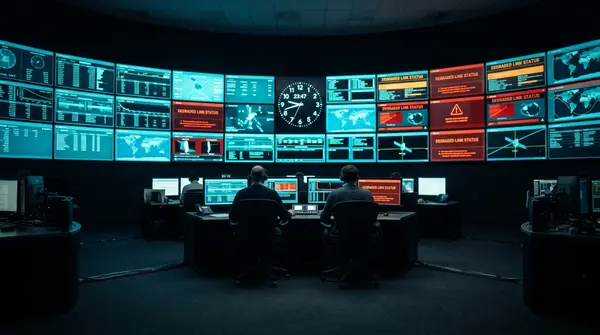
Incident handling and crisis management, on the clock. Illustrative image. 
Security built into the standard, not bolted on after. Illustrative image. 
Effectiveness, actually assessed. Illustrative image.
The duties NIS2 now writes down are ones we have already carried under real pressure. Not advised on, carried. Each of these was done before the Directive made it a legal obligation, which is the only kind of evidence that means anything.
- Incident handling and crisis management, on the clock. Led global cybersecurity operations at a European satellite operator through the February 2022 Viasat attack, when tens of thousands of modems went down across Europe in minutes. That is Article 21(2)(b) and (c) lived rather than documented.
- Security built into the standard, not bolted on after. Over 500 hours as Technical Editor of IEEE P3536, from scoping through ballot, plus three peer-reviewed IEEE publications on space system security. That is Article 21(2)(e), security in the development and maintenance of systems, at the level where the requirements are written.
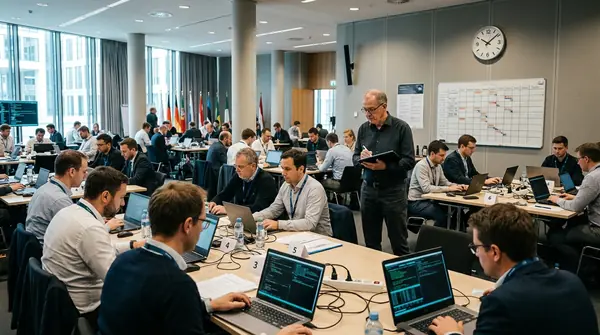
- Effectiveness, actually assessed. Ran Operation Electro Magnetic Panic in Madrid in October 2025: five ground-station teams, eight challenges, 21 professionals certified. That is Article 21(2)(f), and the whole pack is published for anyone to check, now being packaged as the first H3 exercise bundle.
Leading
The seats where the rules for this sector are still being written, held now rather than once.
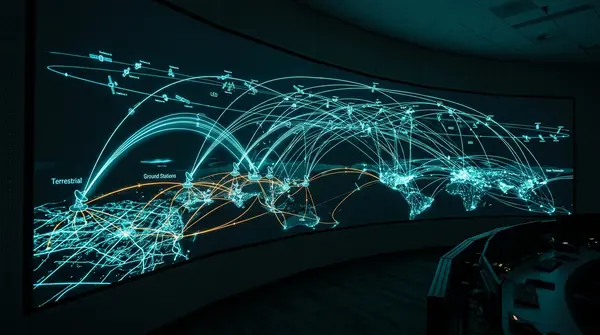
Writing the standard your programme will be measured against. Illustrative image. 
Extending supply chain transparency to whole space systems. Illustrative image. 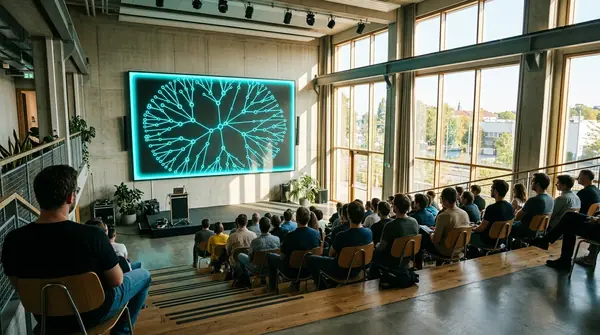
Publishing the method instead of selling it. Illustrative image.
The work did not stop when the standard reached ballot. We hold the seats where the rules for this sector are still being written, which means your programme is designed against what is coming rather than what has already been superseded. These are current appointments, not past ones.
- Writing the standard your programme will be measured against. Technical Editor of IEEE P3536 and lead of its Integration Subgroup, the group making the user, link, ground and space segments hold together as one security picture instead of four.
- Extending supply chain transparency to whole space systems. Co-chair of the Space System Extended (x) Bill of Materials Task Force at the Space ISAC, where bill of materials practice long familiar in software is being worked out for spacecraft and the supply chain behind them. That is Article 21(2)(d), before the tooling for it exists.
- Publishing the method instead of selling it. METEORSTORM is an official MISP taxonomy, the H3 harness is published in full at no fee for anyone to run, and we are accredited by the Luxembourg Ministry of National Education as an organizer of continuing vocational training. That is Article 21(2)(g) and the sharing Article 29 encourages.
Thinking
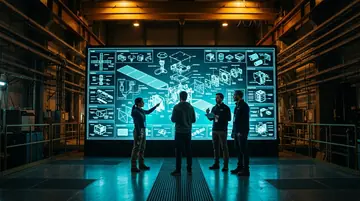
The Pentagon of Pain: the five transformations that make an adversary pay for the attempt.
The Pentagon of Pain is an internal transformation across departments, mindsets, and priorities, ideally evolving toward a Space Collective Defense community where ISAC information sharing of IOCs, IOAs, detection signatures, and resilience measures raises the bar for real-world platform exploitation. The five points below are reproduced as published.

-
1
Master Decomposition
“The adversary suffers when you know your platform better than they ever can.”
Organizations must have a deeper understanding of their platforms than the adversaries targeting them, from development to decommissioning.
-
2
Master Contextualized Threat Modeling
“The adversary suffers when every strike they imagine is already prepared for.”
Organizations must develop an attack to defend capability for their platforms focused on kinetic, non-kinetic, electronic warfare, cyber warfare, and other key exposure domains including naturally occurring threats.
-
3
Master Converged Detection Engineering
“The adversary suffers when they cannot hide, and every move is seen.”
Organizations must evolve into a converged data and signals approach to illuminate complex attack patterns and reduce adversary dwell time.
-
4
Master Exposure Management
“The adversary suffers when every path they take ends in a trap.”
Organizations must continually enumerate the attack paths created by both exposed and isolated platform elements and work towards platform deception techniques.
-
5
Master Adversary Management
“The adversary suffers when their plans are known, broken, and turned against them.”
Organizations must align decomposition, contextualized threat modeling, converged detection engineering, and exposure management with real world adversary profiles to detect, disrupt, and deter adversaries targeting their platforms.
Sponsors and contributors
The partners who fund and pilot the work, and how to become one.
Research and Development Partners
303 Overwatch collaborates with a select group of Research and Development Partners on focused technical initiatives that extend METEORSTORM into domain-specific environments such as maritime, aerospace, orbital, and deep space operations. Each partnership is structured around a defined research topic.

Community Contributors
Community Contributors are individuals and organizations contributing their time, feedback, and hands-on piloting of METEORSTORM, validating the framework in real-world environments and strengthening the collective defense posture of the international space community.

Research, legal position and identifiers: what we study and publish, the law we work under, and the registers that identify the association.
Session
What we do
We set up your own exercise programme, run the method with you, and train your team.



Training
Training options
SCOR Associate: live instructor led, evening cohorts. Illustrative image. 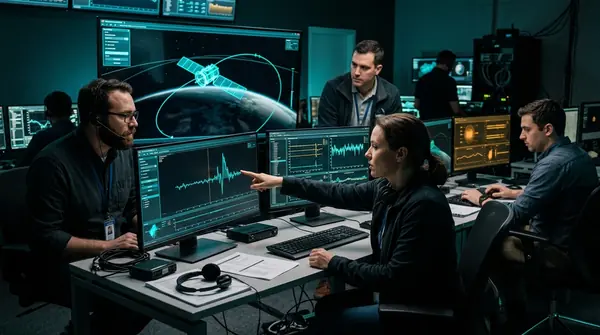
SCOR Practitioner: your platform flown under simulation. Illustrative image. 
The five functions, delivered privately for your team. Illustrative image.
The method is yours to run. Some organisations want it taught rather than read, want their team assessed rather than self-assessed, or want a credential at the end of it. That is what the SCOR micro-credentials are for, and they are how the work is sustained.
SCOR-A
SCOR Associate
A focused four-hour live instructor led micro-credential introducing Resilient Cyber Operations for space platforms.
- Fee
- 250.00 EUR, or 150.00 EUR for Space ISAC members
- Next cohort
- 9 and 10 November 2026, 18:00 to 20:00 CET
- Duration
- 4 hours, one live cohort
- CPE
- 4 credits
What this course covers: SCOR Associate Preregister for SCOR Associate
SCOR-P
SCOR Practitioner
An immersive eight-hour micro-credential with a hands-on incident response exercise on a spacecraft digital twin.
- Fee
- 2,500.00 EUR, or 1,500.00 EUR for Space ISAC members
- Next cohort
- Week of 9 November 2026, Mon to Thu, 18:00 to 20:00 CET
- Duration
- 8 hours, live instructor led
- CPE
- 8 credits
What this course covers: SCOR Practitioner Preregister for SCOR Practitioner
As of
Fees indicative until preregistration; cohort dates from the Center of Excellence schedule of , checked .
Single modules
The five functions, taught one at a time: one hour live each, then a week of instructor support, scheduled on demand.
-
SCOR-M01
Concept of Operations Decompose a space platform into the enumerated elements every later security finding attaches to. -
SCOR-M02
Contextualized Threat Modeling Anchor known adversarial threats to the specific platform elements they target. -
SCOR-M03
Converged Detection Engineering Trace attack paths and enumerate the data and signal sources a defender must hold to see them. -
SCOR-M04
Incident Response Preparation Write the detection signatures and response playbooks that run when they fire. -
SCOR-M05
Adversary Management Build resilience measures that shrink, harden, or remove the platform elements adversaries keep coming back to.
For a team, the five functions can be delivered privately, and a Hackathon-as-a-Service session sets up your own exercise programme with you. Both start as a group training request.